The State of Financial Education Today
Interest in financial literacy education has been growing, with topics like investing now part of required high school curricula in some countries. Even so, class time is limited, and teaching a real, practical feel for how markets and asset-building work is genuinely hard to do from a textbook alone.
Students can learn the mechanics of stocks and funds on paper, but without ever watching prices move or making a trading decision themselves, that knowledge tends not to stick.
The Cost of Low Financial Literacy
Entering adulthood without a solid grounding in financial literacy often means a late start on building assets, or picking financial products without really understanding the relationship between risk and return.
'I never learned this in school, so it just felt scary' is a common refrain. Getting comfortable with the basics of markets and investing early on keeps more options open later in life.
Why 'Experiencing' Beats 'Being Taught'
Financial knowledge tends to stick better when it's learned hands-on rather than purely through lectures. This is true across many fields, but it's especially pronounced in investing, where the result — money going up or down — is immediate and visible.
Since real money obviously isn't an option in a classroom, a zero-risk simulation that mimics real trading closely is a genuinely sensible teaching tool.
What Makes a Stock Game a Good Teaching Tool
- 1Zero-risk real trading experience: students buy and sell with no real money from them or their families ever at stake.
- 2Real metrics: PER, PBR, ROE, and dividend yield appear just as they do in actual investing, giving students practice asking 'is this cheap?' with real numbers.
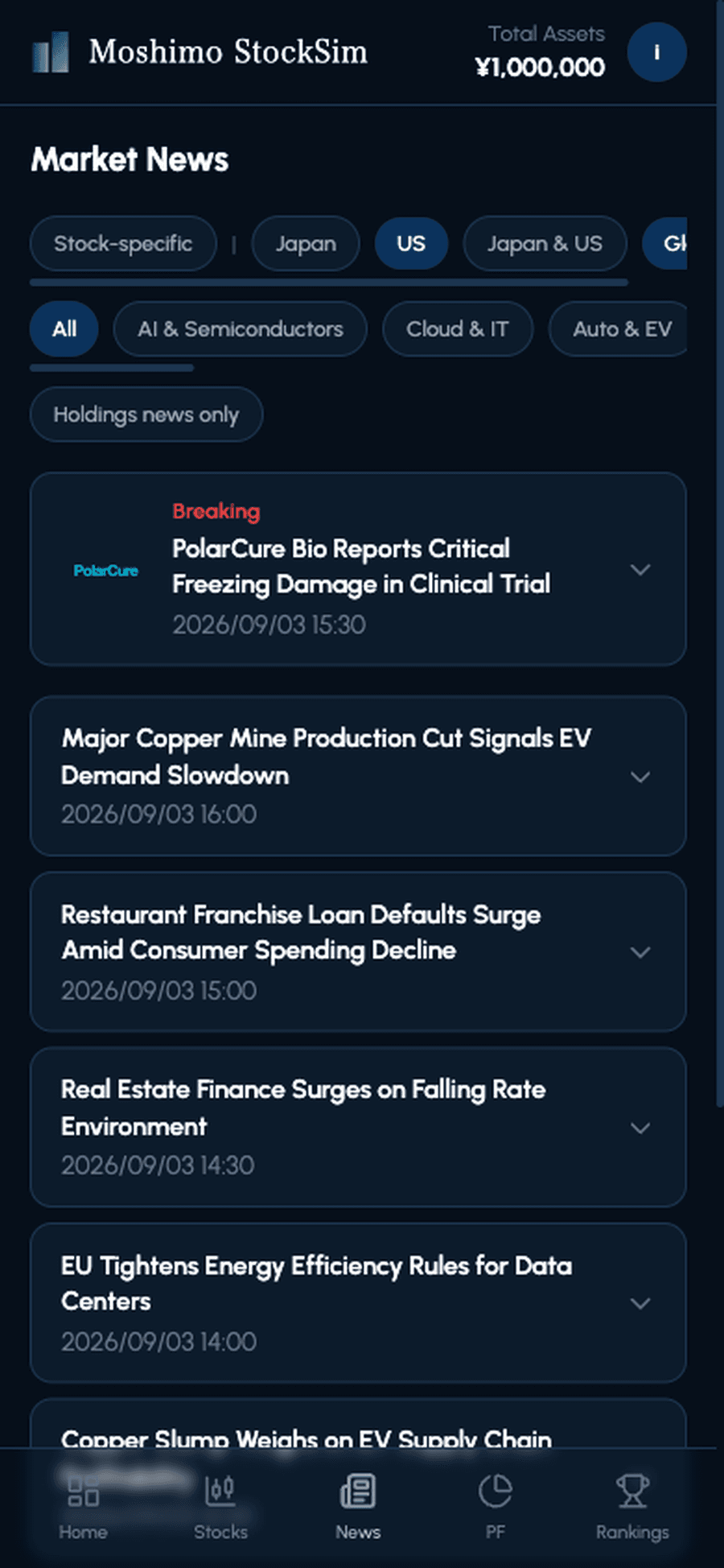
- 3News-to-price connection: seeing how real-world events move stock prices builds a foundation for reading economic news critically.
- 4Sustained motivation: rankings and missions turn a one-off lesson into something students keep coming back to.
Ways to Use It at Home and in the Classroom
At home
Parents and kids can discuss which stocks to buy together, much like talking through how to spend an allowance. Simply asking 'why did you pick this company?' is already a valuable financial-education moment.
In the classroom
Setting aside time to actually use the app, as part of a social studies or life-skills unit, helps connect textbook explanations to something tangible. Groups could build their own portfolios and present the results to the class.
About Moshimo StockSim
Moshimo StockSim is a free simulation game where you trade over 200 fictional companies across Japan and the US using virtual funds. No real money is ever needed, and there are no in-app purchases.
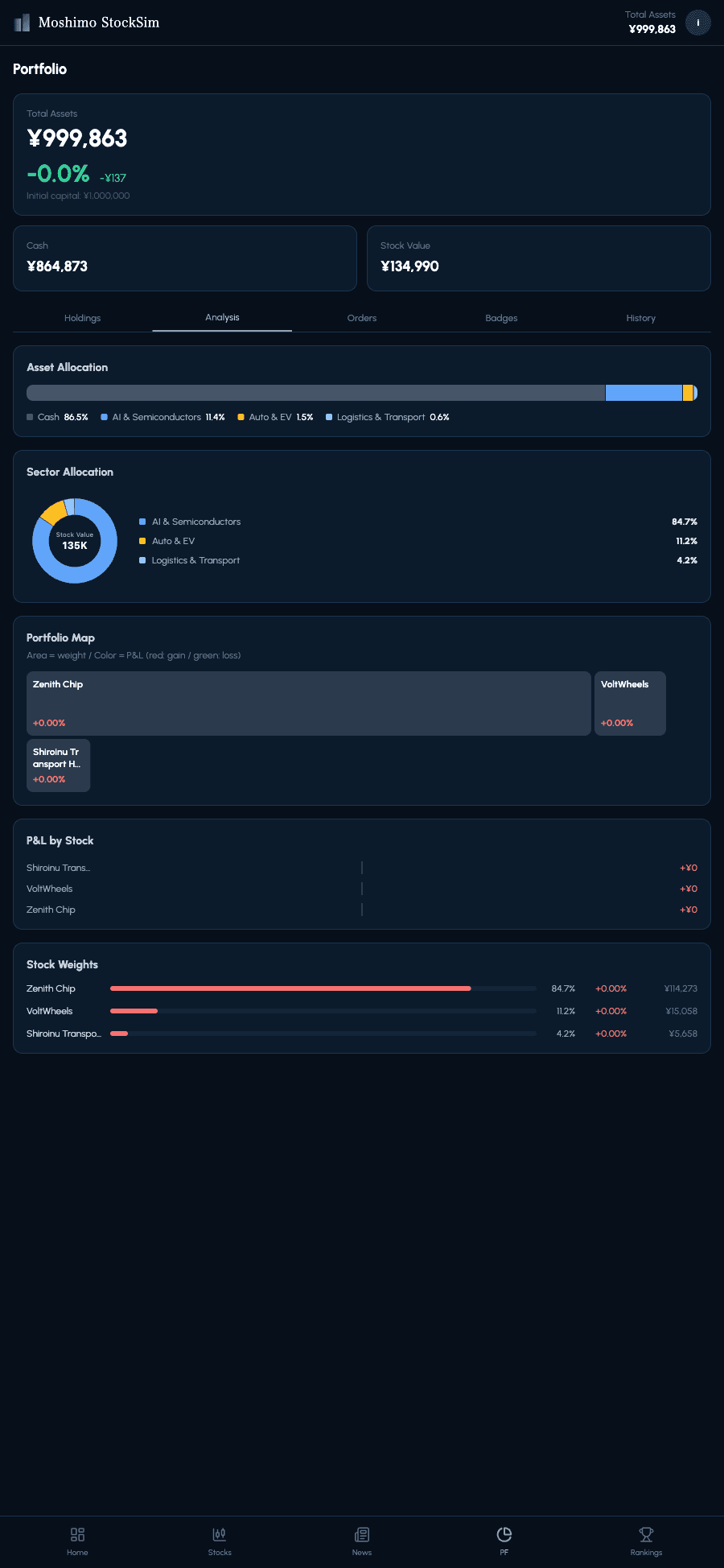
Because every player shares the same market, students experience not just their own decisions but the market moving as a whole. It's designed to be an easy, low-friction entry point into financial literacy — at home or in the classroom.
For high schoolers and adults, there's also a Real Stock Mode that uses real U.S. companies' prices and news. Trades still use virtual funds only, but practicing on actual companies is a natural next step for anyone wanting to go a level deeper.
 Try Free US Stock Demo Trading
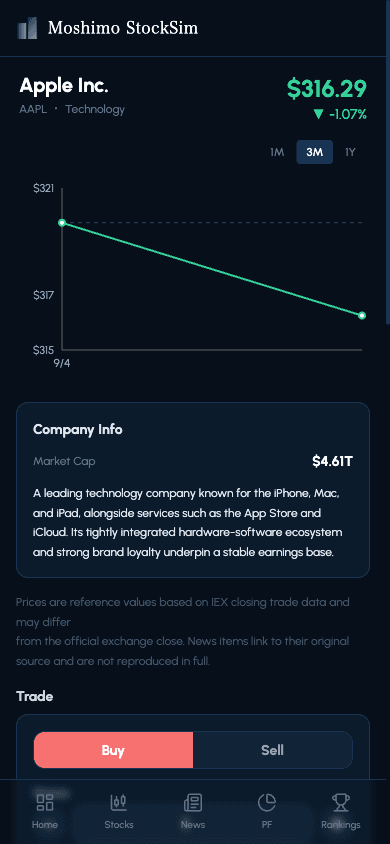
A closer look at Real Stock Mode, where you can practice free demo trading on 58 real US companies like Apple and NVIDIA.
Live prices from the shared market right now. Tap any stock to see its chart and news — no account needed.
Play free in your browserFAQ
Is it safe for kids to use?
Since no real money is ever used, it's a safe tool for financial education.
Can it be used in school lessons?
Yes — as part of a life-skills or social studies unit, with time set aside to actually use the app.